★
Serving Dallas Fort Worth, Texas
★
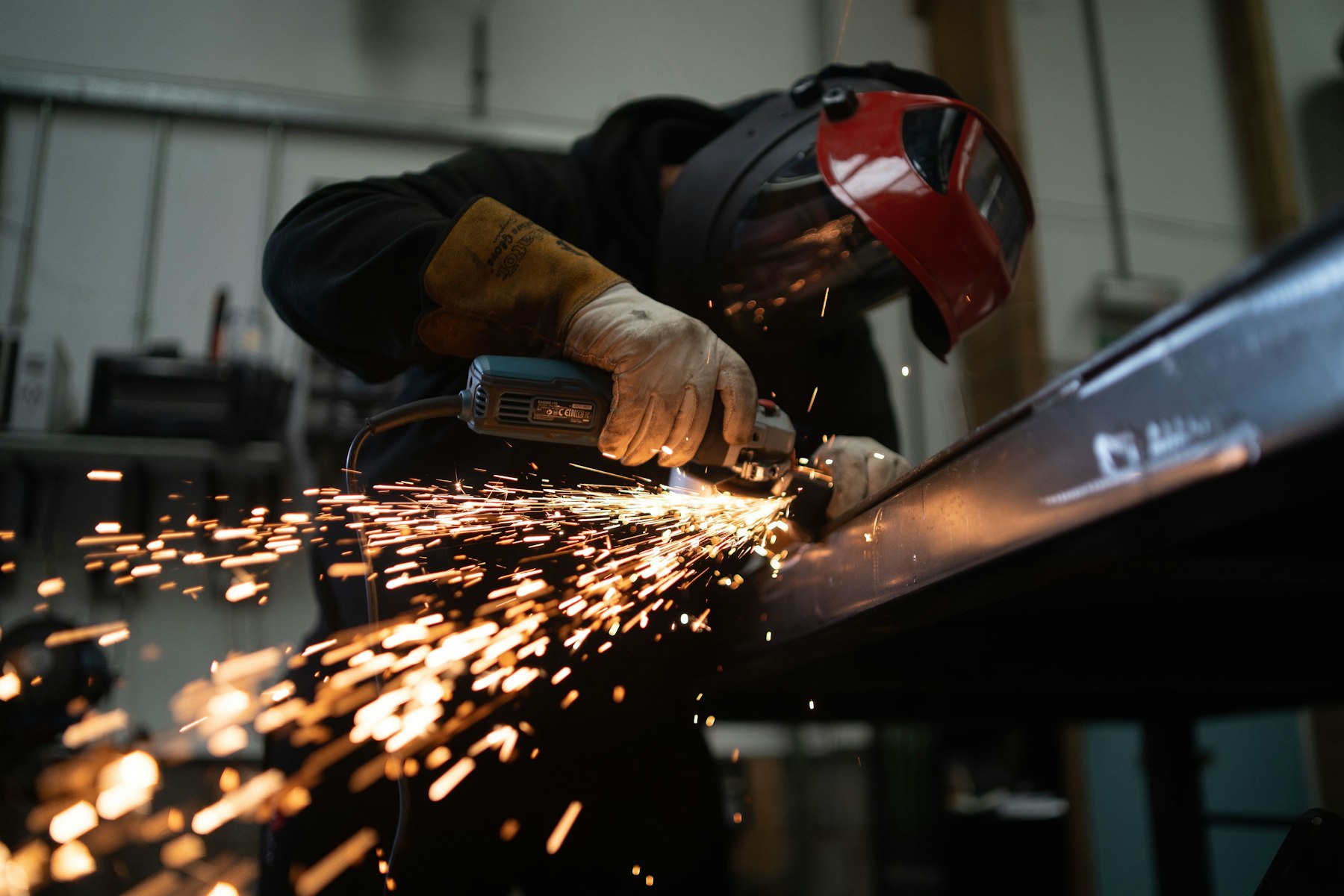
RedLine Welding Services
Custom metal fabrication built to your specifications — one-off parts, repeat runs and everything in between.
Bring us a drawing, a sketch or a broken part and we will build it. We fabricate in mild steel, stainless and aluminium, from a single bracket to a full assembly.
Every piece is measured, cut and welded in-house, then finished ready to install — so it fits the first time it goes on.
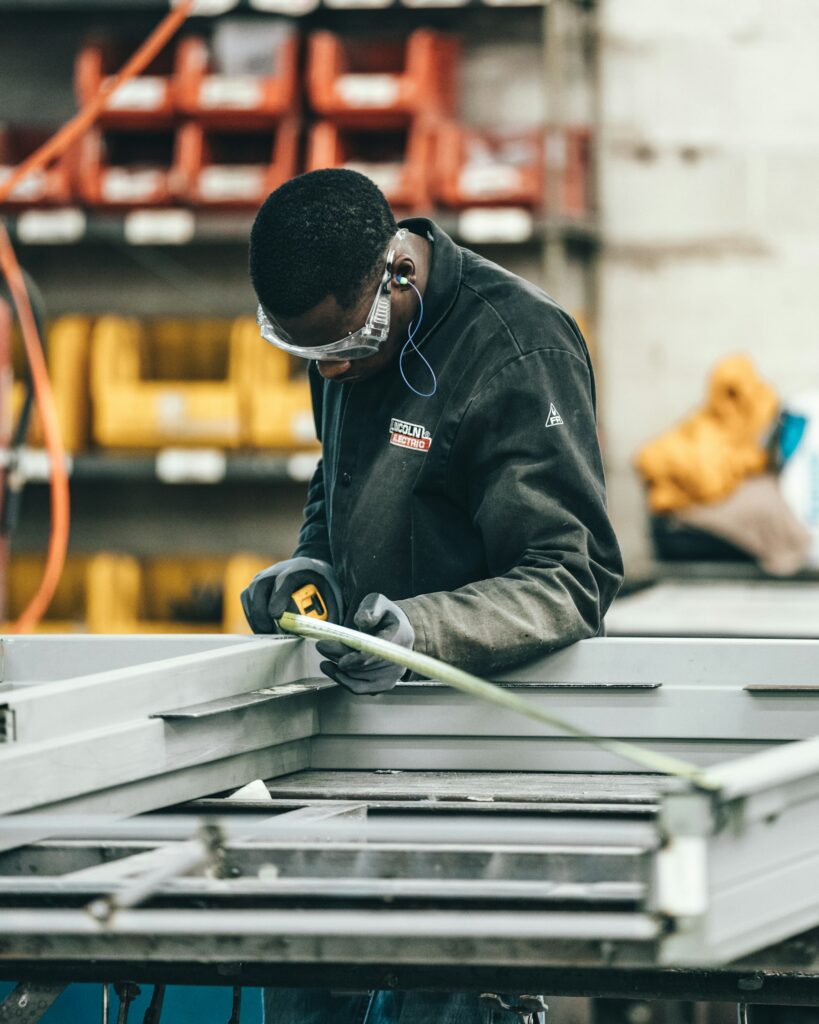
People picture welding. In practice a fabrication job is six steps and welding is one of them: measure the space as it really is, design something that fits and does the job, select material — grade, section size and wall thickness, cut and prepare the parts, fit and weld, then finish, because bare steel in Texas does not stay bare for long.
The measuring decides more than anything else. Openings are rarely square, slabs are rarely level and posts are rarely plumb. A gate built to the nominal width of an opening that is an inch wider at the top will bind or leave a gap, and no amount of good welding fixes that afterwards. When we ask to come and measure, it is because that visit is what makes the piece fit.
We work from your drawings or produce our own. A sketch on paper with rough dimensions is a perfectly good starting point — the design gets firmed up before anything is cut, which is exactly when changes are free. Changing a drawing costs nothing; changing fabricated steel does not.
From idea to installed
Site visit — the opening, the ground, the fixings, and what the piece actually has to do. Nothing assumed square.
A drawing, a material spec, a finish and a written scope, so both of us describe the job the same way.
Cut, prepare, fit and weld. Powder coating or galvanising goes off site and adds lead time.
Set posts or fixings, hang and align, adjust, and touch up any protection disturbed on site.
Two choices decide how long fabricated steel lasts outdoors here, and neither is the welding. Mild steel is the strongest value for gates, frames and stairs but must be finished. Galvanised suits exposed posts and rails, though the coating has to be ground back before welding and re-protected after. Stainless suits wet, architectural and food-contact work. Aluminium makes a lighter gate but behaves differently under fatigue.
On finishes: primer and paint is cheapest and shortest-lived, powder coating gives a hard even finish but is applied off site, and hot-dip galvanising lasts longest — also off site, and long thin sections can distort in the bath, so it is designed for from the start. Whatever the choice, hollow sections get drain holes at the low points; box section that collects rainwater rusts from the inside out, invisibly.
We take on fabrication work across Dallas, Fort Worth, Arlington, Irving, Grand Prairie, Plano, Frisco, Garland, Richardson, McKinney, Carrollton and the surrounding metroplex — residential gates and rails, commercial stairs and platforms, and one-off pieces that exist nowhere else.
Worth knowing before you commit: stairs, handrails and guardrails are governed by the building code your city has adopted, and commercial or public work usually brings accessibility requirements with it. Anything load-bearing on a building needs a licensed structural engineer. We will tell you which of those three categories your project falls into before quoting. There is more detail in our guide to custom metal fabrication in DFW, and pricing is explained in the welding cost guide.
Fabrication is the right heading when the thing you need does not exist yet and has to be made to fit. If something already exists and has broken, that is mobile welding and it can usually be fixed where it stands. If the piece will carry part of a building — a beam, a column, a lintel — it is structural welding and a licensed engineer specifies it first. For machines and attachments, see equipment repair; for keeping existing steelwork sound, see maintenance and repair.
Yes. A sketch on paper, rough dimensions, a photo of the space and a saved picture of a style you like is plenty to begin. What is not enough is a description with no dimensions and no photo — nobody can quote that honestly.
The steelwork is usually the fast part. Lead time is driven by material availability and, more often, by finishing — powder coating and hot-dip galvanising both happen off site and add days. If you have a deadline, say so at quote stage so the finish can be chosen around it.
Yes, and it is worth having the same people do both — installation is where fit problems surface, and whoever built the piece can adjust it. Be aware that installation sometimes brings other trades with it: new gate posts may need concrete, and a stair may need a landing poured before any steel arrives.
Usually. Send close photos with a tape or ruler in shot for scale, plus pictures of the joints and the finish. An exact profile match is not always possible if the section is no longer manufactured, but a close visual match nearly always is.
It depends on your city and on the item. Fences and gates on private property often do not need one, though height and setback can still be governed locally. Stairs, guardrails and handrails — particularly commercial, rented or public-facing — are commonly inspected. Anything load-bearing on a building needs an engineer. Your city’s building inspection department is the authority, and it is a short call.
Often, and it is usually cheaper. Sagging leaves can be re-braced, worn hinges replaced, cracked joints cut out and rebuilt, and posts straightened or re-set. The judgement point is corrosion — if the section has rusted thin in several places, repairing one area just moves the failure along, and that is the moment to talk about replacement.
Tell us what you need and we will come back with a straight answer and a fair price. Free, fast, no obligation.