★
Serving Dallas Fort Worth, Texas
★
Mobile Welding
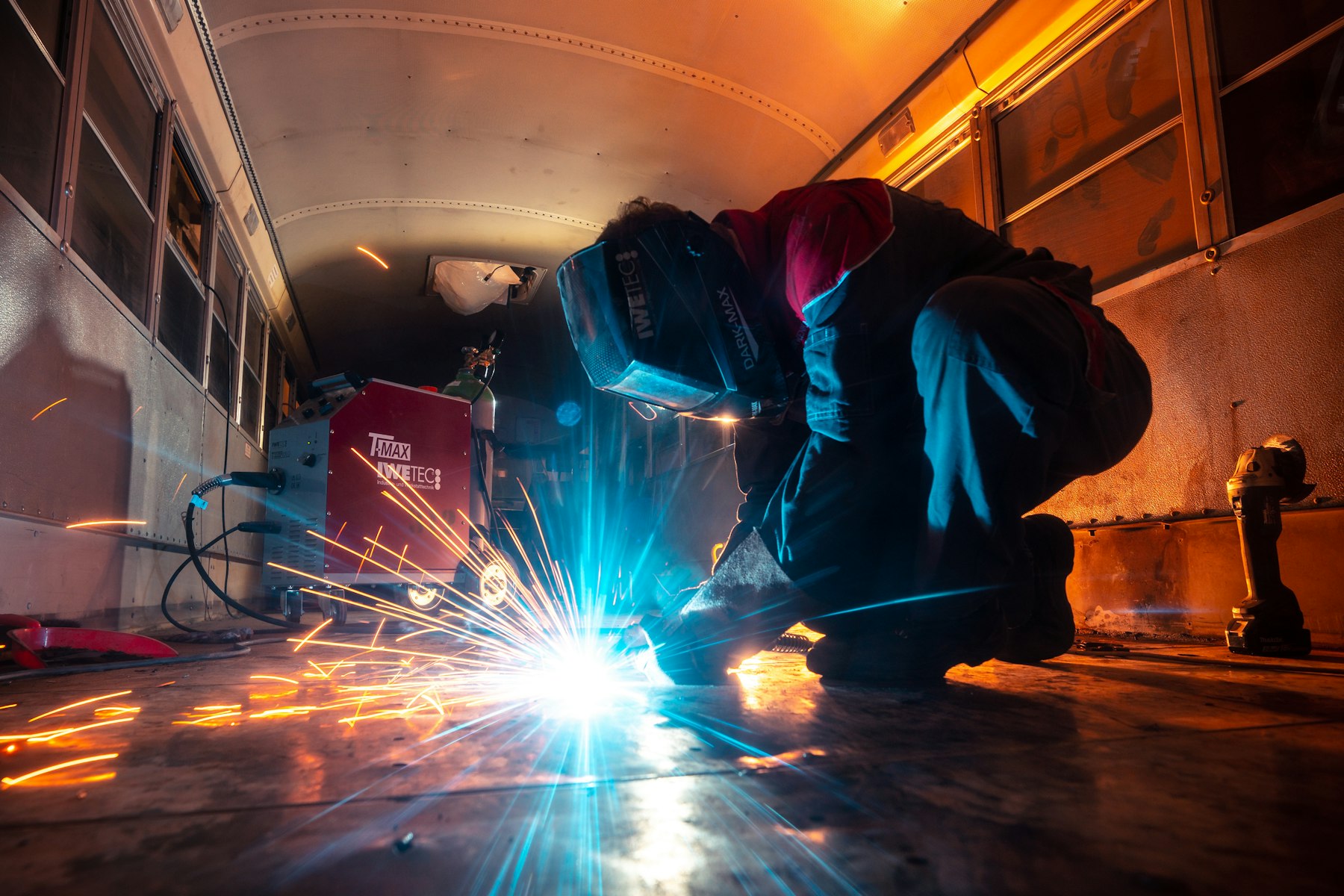
A fully equipped rig brought to you — so the broken thing gets fixed where it stands instead of being hauled somewhere.
The rig is the whole point. A fully equipped mobile welding truck carries its own engine-driven welder and fuel, long leads, grinders, cutting and gouging gear, clamps and consumables — so nothing at your location has to supply power. That is what makes a repair possible in a driveway, on a job site, in a yard or at the side of a road.
Most of a visit is not welding. It is getting at the damage and preparing it: stripping paint, rust, grease or galvanising back to bright metal, finding where a crack really ends, drilling it to stop it travelling, and bevelling the joint so the weld reaches the root instead of bridging the surface.
Cracked frames, brackets, mounts and supports
Gates, hinges, latches and posts
Handrails, guardrails, steps and stair stringers
Equipment, attachments and machine guards
Fence posts, panels and security bollards
Emergency and after-hours call-outs
Outdoors we usually run stick or flux-core, because both carry their own shielding and keep working in wind that would ruin a gas-shielded weld.
Four Steps
Identify the metal, find the real cause of the failure, and confirm the area is safe for hot work.
Clean back to bright metal, drill the crack ends, bevel the joint and clamp everything in position.
Right process and filler for the base metal, welded in the best position the access allows.
Plate or gusset where the design was the problem, then inspect, clean up and fire-watch.
We cover Dallas, Fort Worth, Arlington, Irving, Grand Prairie, Plano, Frisco, Garland, Richardson, McKinney, Carrollton and the surrounding metroplex.
Two honest notes about a metroplex this size. Travel is real, so a job booked near other work already scheduled in your area costs less than a standalone trip. And “emergency” means prioritised, not instant — a rig leaves as soon as one is free. Service detail is on the mobile welding page, and there is a full explanation in our guide to what a mobile welder does.
No. The rig is engine-driven and carries its own fuel, leads and consumables. What the location does need is safe access to the damaged area and somewhere hot work can be done without fire risk.
Wind is workable — stick and flux-core are the standard outdoor choice for exactly that reason. Rain is the harder limit, because welding involves live electrical current and a soaked work area is a shock hazard, not just a quality problem. Light drizzle under cover is usually fine; a storm means rescheduling.
Yes, when the same process, filler and preparation are used. Strength comes from clean metal, correct fit-up, the right heat and full penetration — none of which need a building. A well-prepared weld in a parking lot outperforms a rushed weld on a bench.
Sometimes. Both need gas shielding, and wind blows the gas away from the weld pool, causing porosity. Inside a building, a bay or behind an effective windbreak it is realistic. On an exposed lot on a windy day it is not.
Yes. Tell us what is stopped because of it — a gate that will not secure, a trailer that cannot be towed safely, a machine holding up a crew — so the job is triaged properly against everything else booked that day.
Most jobs can be assessed from a clear picture of the damage and the location.