★
Serving Dallas Fort Worth, Texas
★
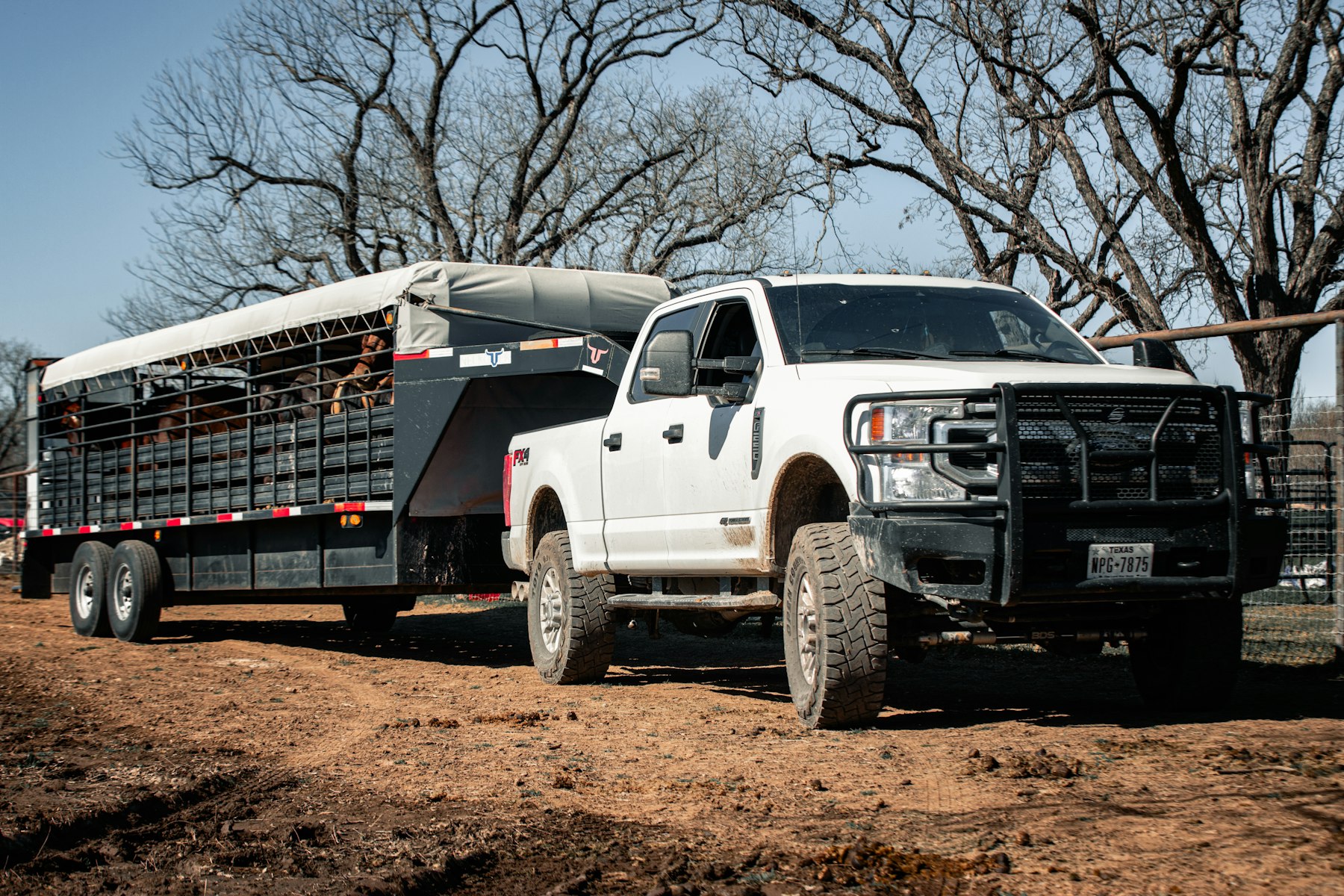
Equipment Repair
Cracked frames, failed couplers, torn spring hangers and broken ramps — repaired where the trailer sits.
Trailers fail in predictable places, and almost all of it is repairable steel. The frame carries load into the axles, the coupler is the single connection to the tow vehicle, and the spring hangers take every impact the road delivers. When one of those cracks, the trailer should come out of service until it is looked at — those failures happen under load.
Almost all of this can be done where the trailer stands: a driveway, a yard, a job site, a storage lot. A mobile rig carries its own power and consumables, so the trailer does not have to be towed anywhere first — which matters when towing it is exactly what is unsafe.
Frame rail and crossmember cracks
Couplers, tongues, safety-chain mounts and jacks
Spring hangers, equaliser and shackle mounts
Ramps, gates, hinges and latches
Decks, floors and rotted deck supports
Tie-down rings, D-rings and stake pockets
Most of the time on a trailer goes into preparation — road grime, undercoating and rust all have to come off before a sound weld is possible.
Four Steps
Find every crack, not just the one you spotted, and work out why it started there.
Clean to bright metal, drill the crack ends, bevel the joint so the weld reaches the root.
Stick or flux-core for penetration on thick, outdoor or less-than-clean steel.
Fish plate or gusset where the section was under-built, then check alignment and fire-watch.
We cover Dallas, Fort Worth, Arlington, Irving, Grand Prairie, Plano, Frisco, Garland, Richardson, McKinney, Carrollton and the surrounding metroplex.
Two things worth mentioning when you call: whether the trailer is loaded, because the load may need to come off before welding near it, and whether it is on a public road or shoulder, which is treated as an emergency and has its own safety requirements. Service detail is on the maintenance and repair page, and there is a full write-up in our guide to common trailer welding repairs in DFW.
In most cases it is welded, and a properly repaired frame crack is a permanent fix — drilled at the ends, bevelled and welded to full depth, usually with a plate added where the section was under-built. Replacement becomes the better answer when several rails are rusted through at once.
A crossmember carries deck load rather than towing load, so a single crack on a lightly loaded trailer is less immediately dangerous than a cracked main rail — but it gets worse every trip. Treat it as repair-before-next-load. A crack in a main rail, the tongue or a gooseneck beam means stop towing.
Sometimes, but say so when you call. Two things decide it: whether the load is near the weld area, and whether the damaged member is currently carrying that load. Welding a part that is under load sets the repair up stressed and it can crack again.
Brackets, spring hangers, equaliser mounts and shackle points are welded repairs and are routine. The axle tube itself is a manufactured component — a bent axle is replaced, not straightened or welded, because heating it changes its properties.
Sometimes. Aluminium needs gas shielding and wind blows it away from the weld pool, causing porosity. Under cover or behind an effective windbreak it is realistic; on an exposed lot on a windy day the honest answer is that it is better done under shelter.
Send a photo of the crack, the coupler or the hanger before you hitch up. Usually that is enough to answer it.